Anukari 1.0 is out. Reflections on three years of full-time work, from leaving Google and a broken shoulder to first sound and full polyphony.
Captain's Log: Stardate 79936
Today I released Anukari 1.0.
I started working on Anukari full-time in February 2023, so it’s taken over three years of work to get it from a blank code editor to something I am happy to call 1.0. I’m going to take this opportunity to reflect on what the last three years have been like for me.
2022 was a complicated year for me. I was still employed by Google, but for most of the year I was on leave, caring for and spending time with my mom, who died that October. My bosses at Google were extremely understanding, and due to the length of my leave they helped me transition my reports to other managers. So when I was ready to come back to work in November, I needed to figure out what my new role would be.
I spoke with various teams across Google about some really cool roles. Definitely some stuff that I'd be excited to work on, and some pretty big chunks of responsibility.
But in parallel with talking to teams at Google, on the weekends I sketched out ideas for starting my own business. I figured that if I was going to explore my options, I should cover all my bases.
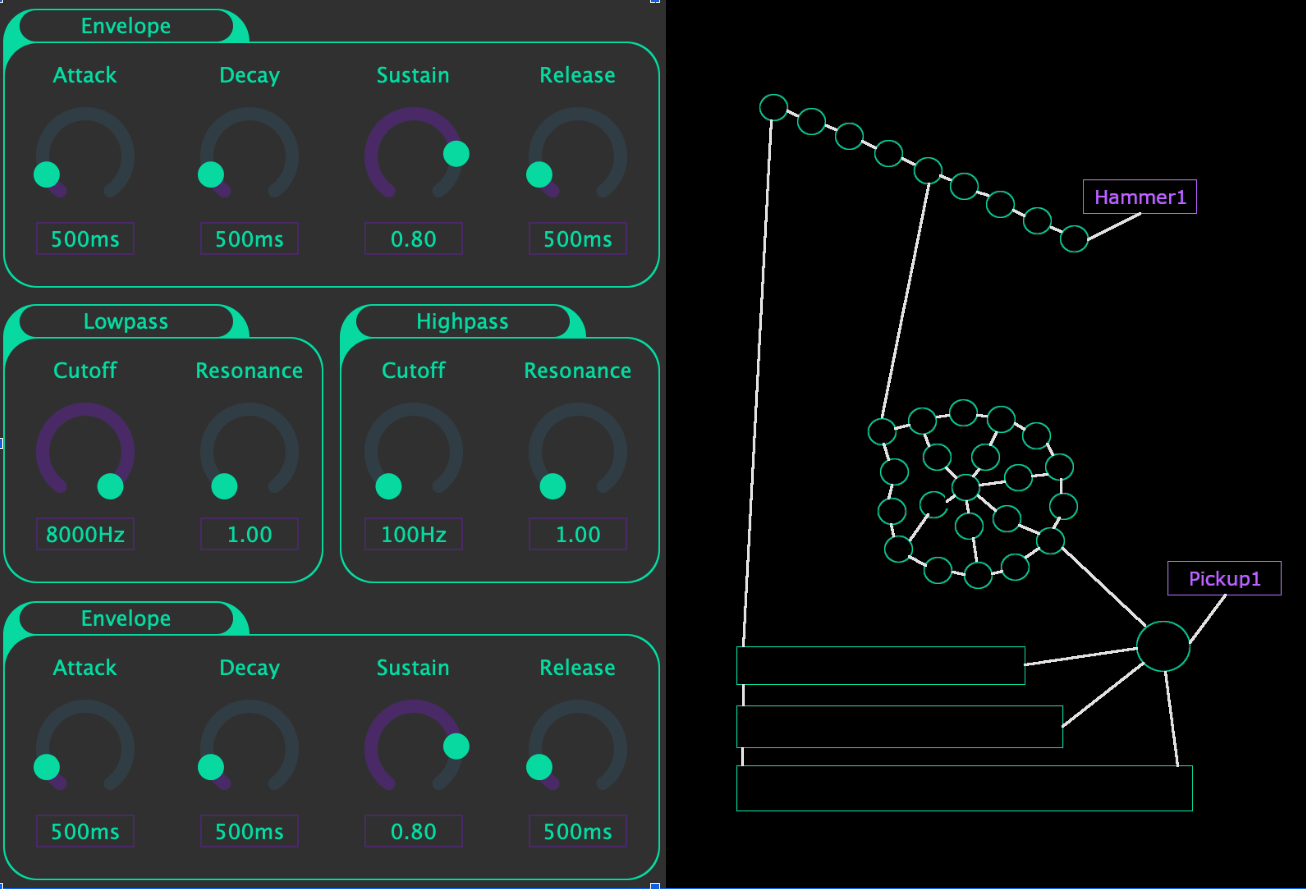
Writing my business ideas was the first time I had truly had fun writing a doc in several years. To be clear, I had a great time working at Google, and had a lot of fun there, but post-pandemic, working remotely, talking to a black plastic rectangle all day, the spark was gone.
Also after losing my mom, I was terribly exhausted. I didn't really yet have the energy to ramp up on a high-responsibility position for a new team. But I had exhausted every form of leave available at Google.
Ultimately I decided to take a risk. Leave Google, take a break for a couple months, and try starting my own business: Anukari.
(Side-note: if you ever check the About menu in Anukari, you'll notice that it's dedicated to Kathy. That's my amazing mom. I wish she could see it.)
After a couple of months of relaxing, I was itching to build something. In early February I started getting some basic infrastructure set up for Anukari. I was just doing little bits of piecemeal coding here and there, and didn't have any real momentum.
Some backstory: I enjoy motorsports. Not so much watching them, as participating in them. My granddad owned an auto shop, so I grew up working on cars, and my dad got me a little 50cc dirtbike when I was a kid. Later I got into autocross, and then full track-days. In late 2021, my wife and I moved from the SF Bay back to our hometown in Arizona, and it wasn't practical to keep my track car. But I couldn't give up motorsports, so I bought a dirtbike to scratch my motorsports itch.
A friend taught me how to jump the dirtbike, and I had been riding a lot after leaving Google. I was getting pretty confident.
In mid-February, I was practicing powerslides on the dirtbike. Compared to jumping the bike, this didn't feel risky at all. But in one fast powerslide, I hit a rut with the back wheel and high-sided the bike. It launched me face-first into the ground, and then the bike landed on top of me. I didn't lose consciousness, but was dazed. After blinking off the initial shock, I decided I needed to get out from underneath the bike, as it was still running, and had a tendency to leak fuel when upside down.
That's when I noticed something... not quite working about my right shoulder. Fortunately my friends ran over and got the bike off me, and got me sitting on a log so we could assess the damage. My shoulder was comically bad looking: it was fully dislocated and the ball of the joint was in a really weird spot. It was also fractured, but that wasn't yet apparent.
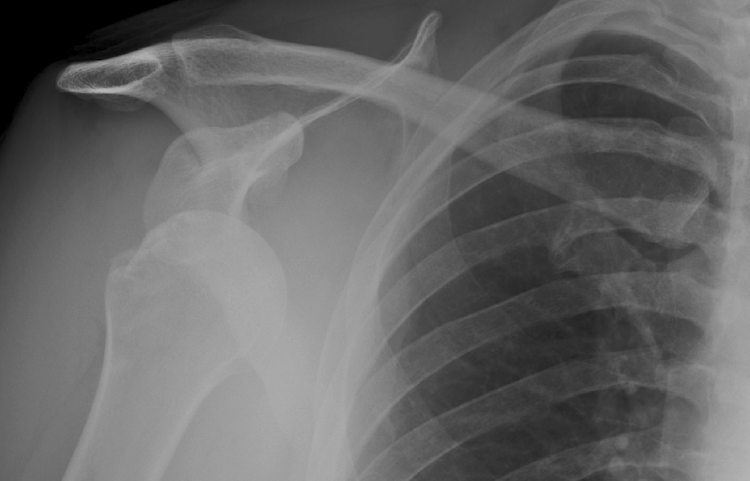
The point of this story is that starting in mid-February, I couldn't do anything remotely physical for a few months. Even the gentle motion of walking was super painful.
But I found that with a split computer keyboard, there was a really specific place I could put the right half of the keyboard in my lap, and I could type comfortably.
This is what really got my momentum going on Anukari. For several months, there was literally nothing I could do except sit at my computer. And while I was writing code, I was completely distracted from the pain. By the time my shoulder started to heal, I had a working prototype and had proved to myself that Anukari was worth building for real.
So: busting my shoulder had a silver lining!
During the first few weeks of working on Anukari, my goal was to decide whether it was worth investing more effort into. So I was writing the hackiest, most down-and-dirty code that I could, trying to avoid wasting any time on "professionalizing" things until I was certain that the results were interesting enough to justify it.
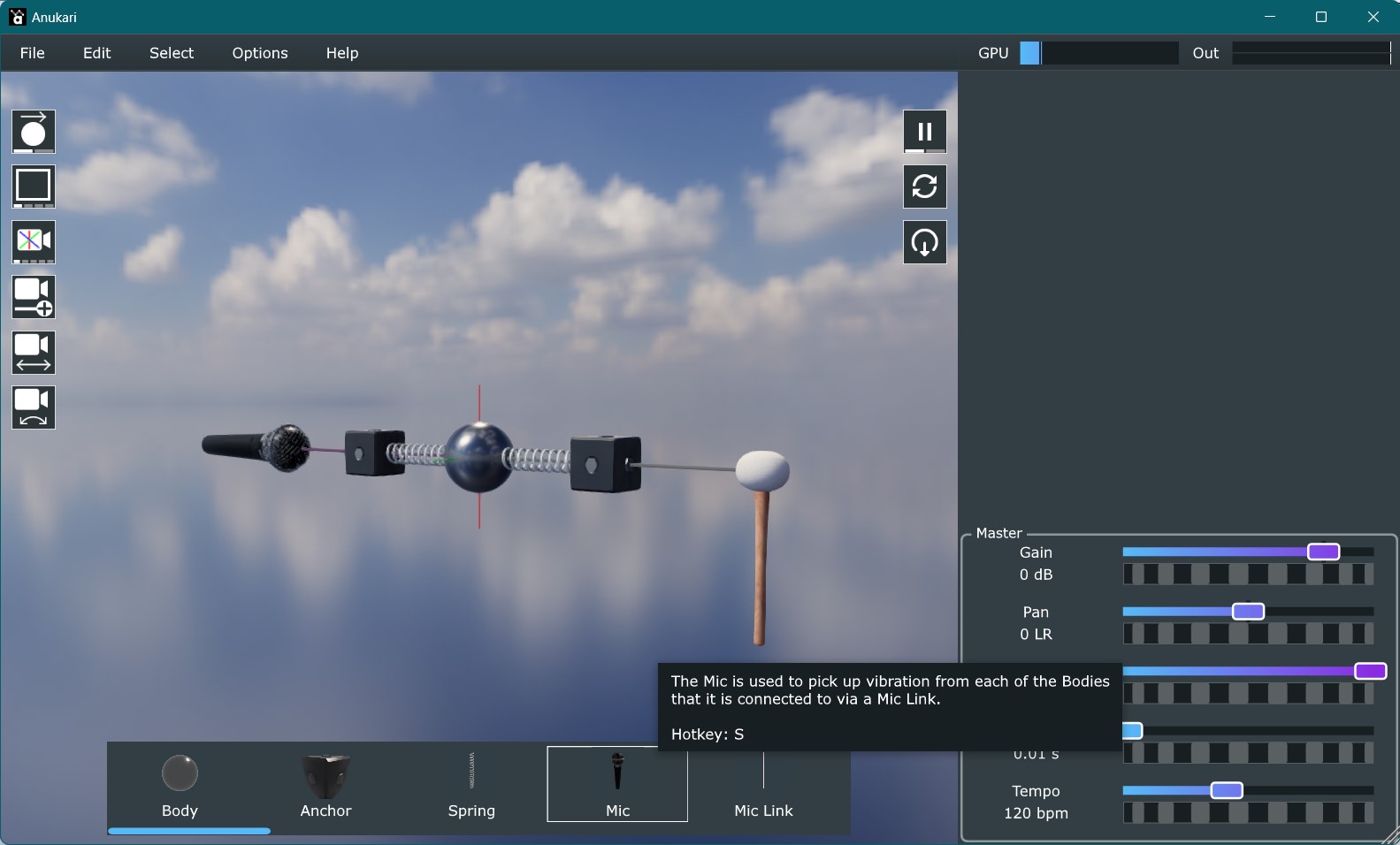
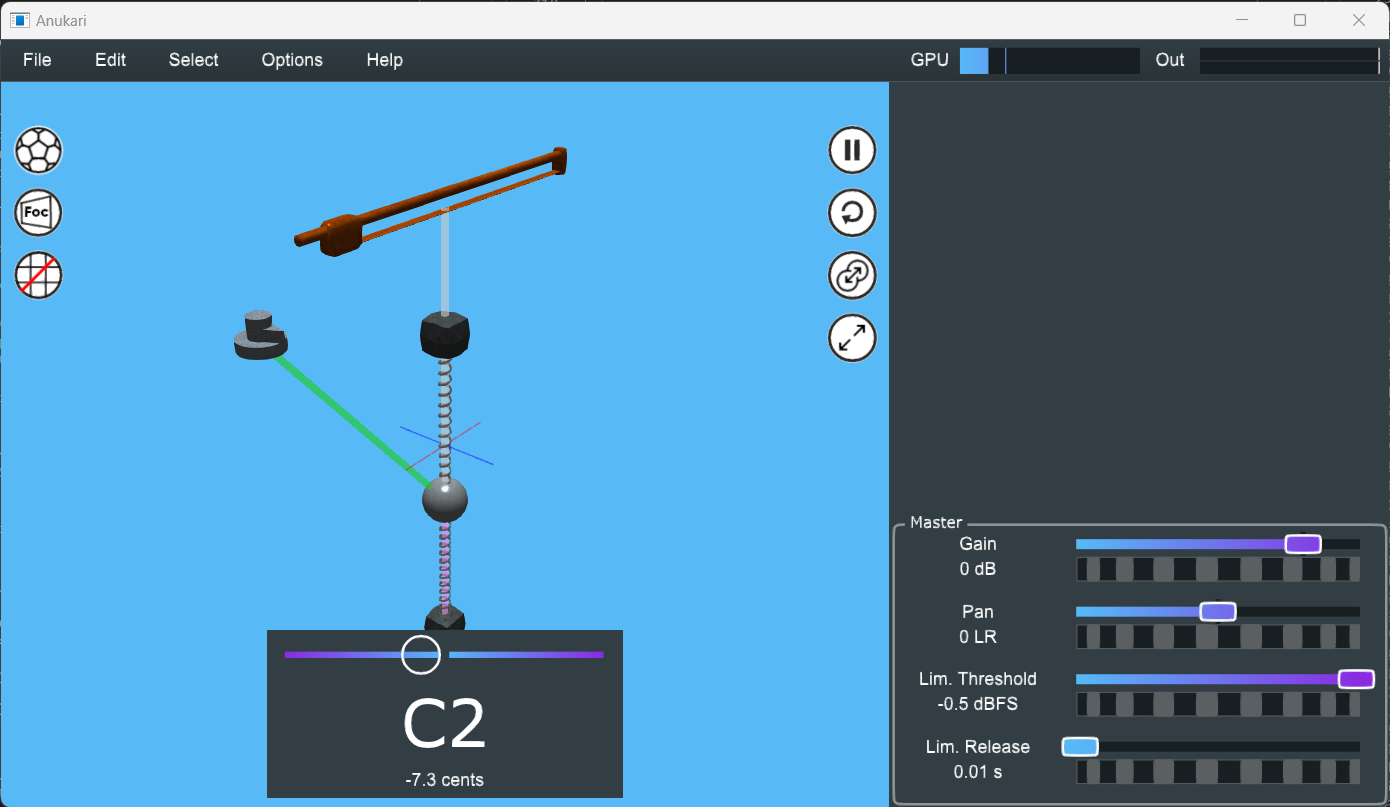
Here are some of the first experiments I ran. This is the first time that Anukari made sound:
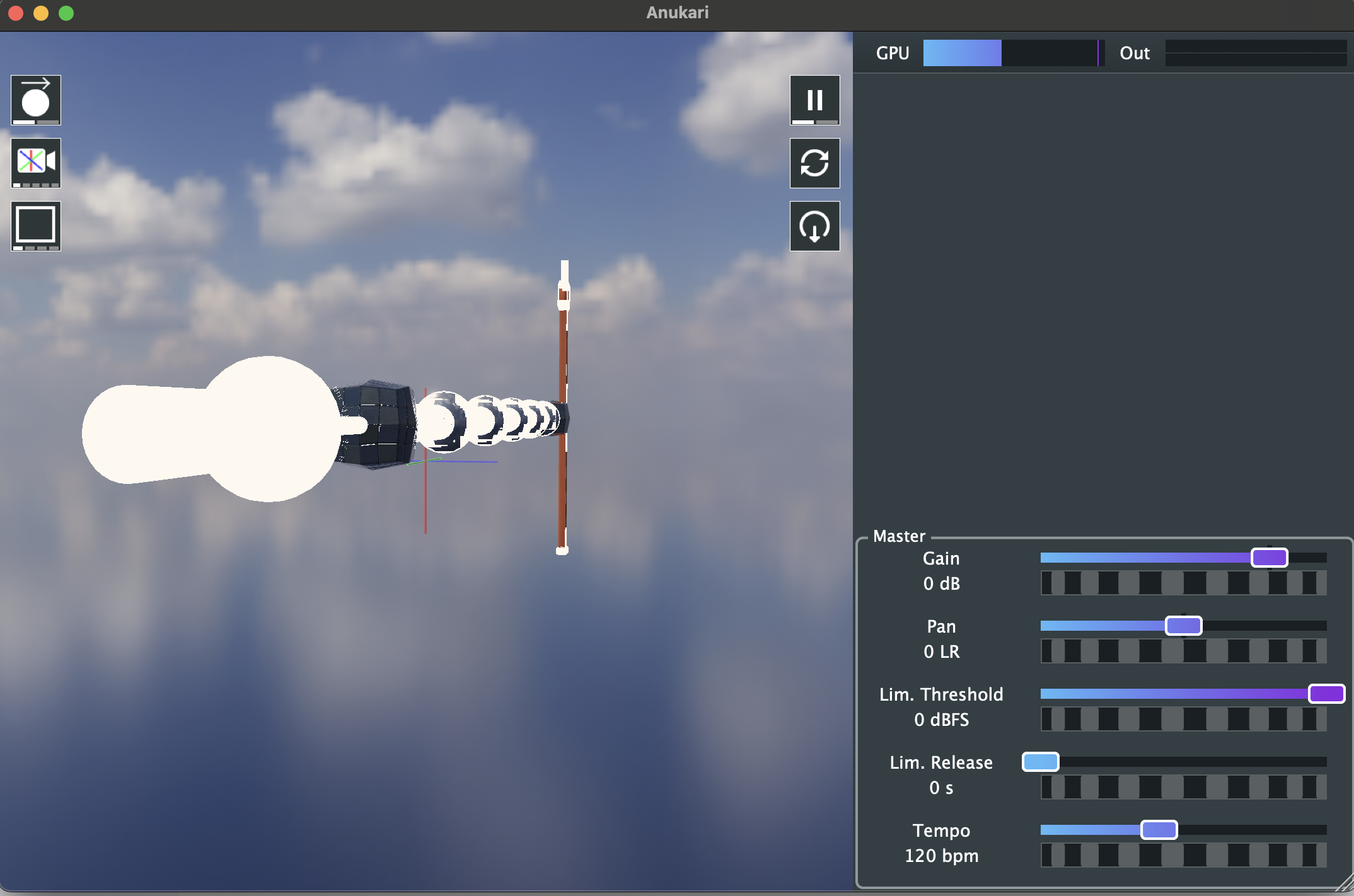
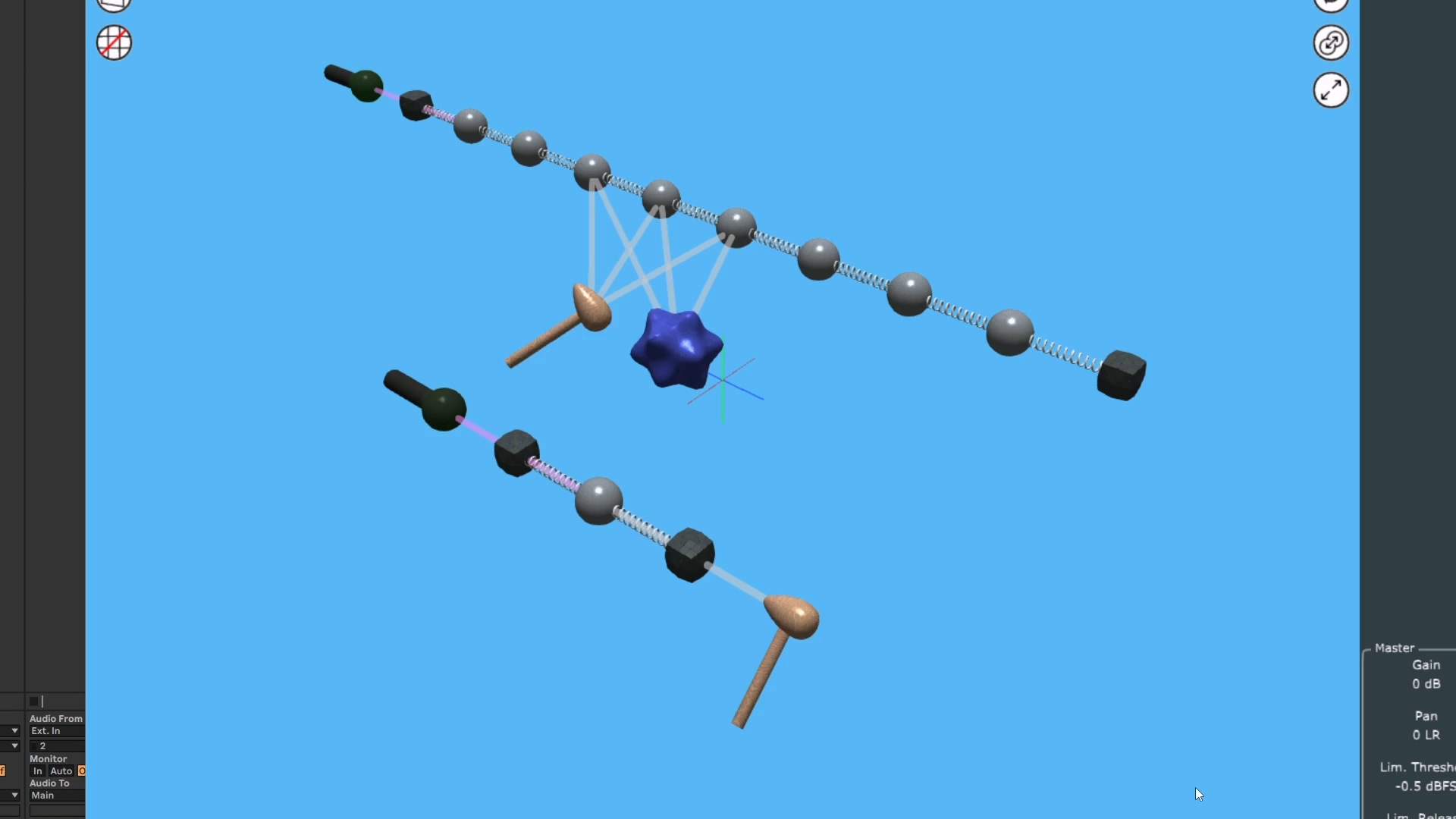
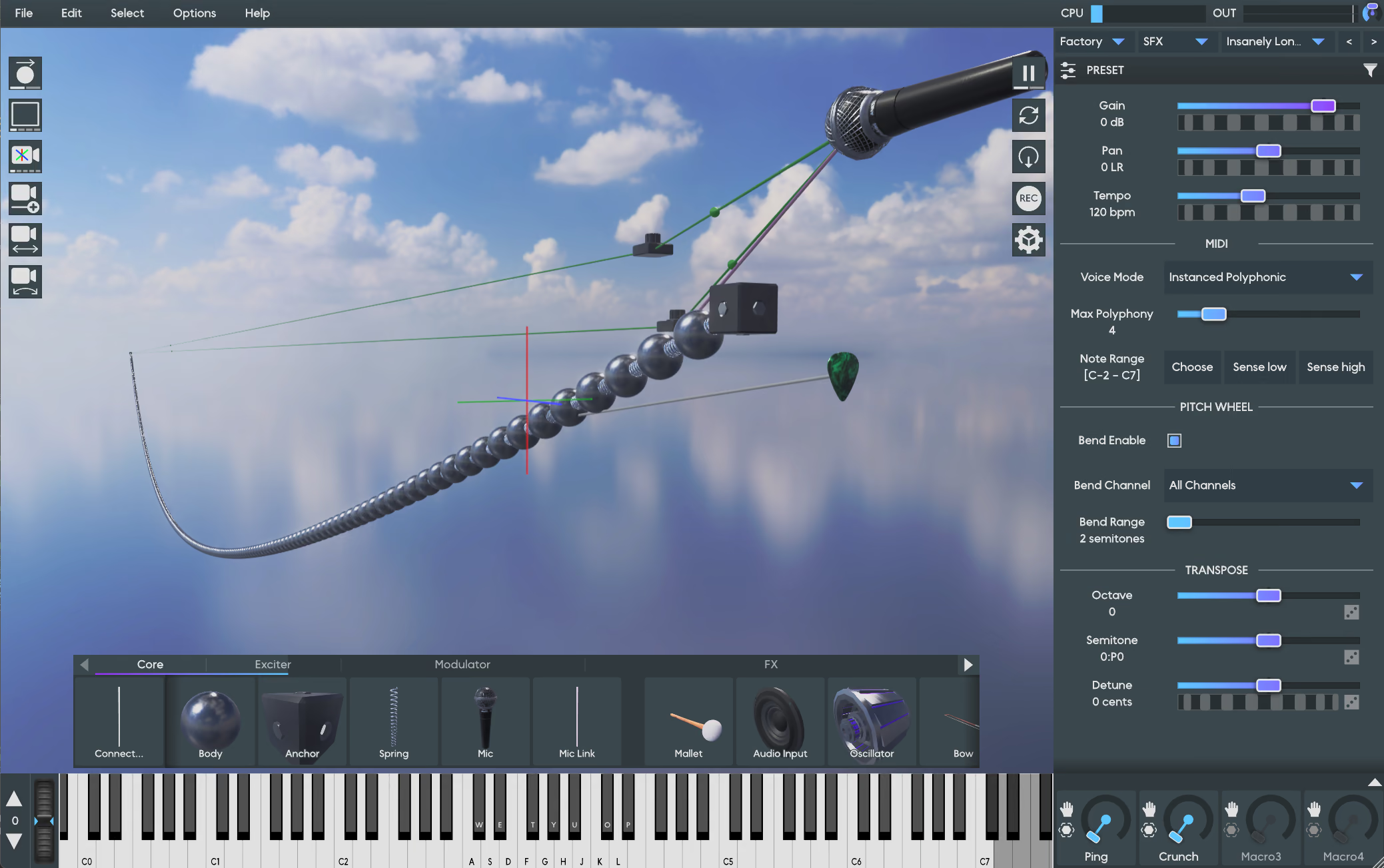
The very first time I displayed basic 3D graphics for the simulation:
This is the first time that I had something resembling springs and lighting in the 3D graphics:
A couple months into working on Anukari, I was convinced that it was worth building. It was making really interesting sounds, and more importantly, I was having a ton of fun playing around with it. I knew it was going to be super niche, but I decided that if I was honestly having fun (and not fooling myself), that I would not be the only person who enjoyed it. I may be a weirdo, but there are 8 billion people out there, so at least a few of them are weird in the same ways as me.
So I got to work. Once the basic thing was working, there was a ton of obvious stuff to build, like a GUI, plugin support, save files, and all the simulation features. At this point I fully committed to working on Anukari full-time (and then some) until I could share it with other people.
In June of 2023, I felt like I had something interesting enough that I could at least share a video about what I was working on. I'm not great at video production, but I watched a bunch of other "introducing X" videos, and picked out the ideas that I liked, and tried to emulate them in my video.
I really liked the intro video for the Nopia synthesizer. I don't know why, but my main takeaway from that video was that I should speak in dulcet tones. In spite of this, the video reached a small audience and I got some really positive feedback. This was pretty invigorating: seeing at least some interest gave me a lot of motivation to keep going.
A few months into the project, I was doing some interesting stuff with using the GPU for the physics simulation. I made the off-the-cuff decision to spend 5 minutes writing up a talk submission for Audio Developer Conference 2023, and it was accepted. So that fall, I went to London to give a talk on what I was doing with Anukari. As a complete newcomer to the audio field, it was my introduction to the audio development community. It was a blast, and I met a bunch of great people.
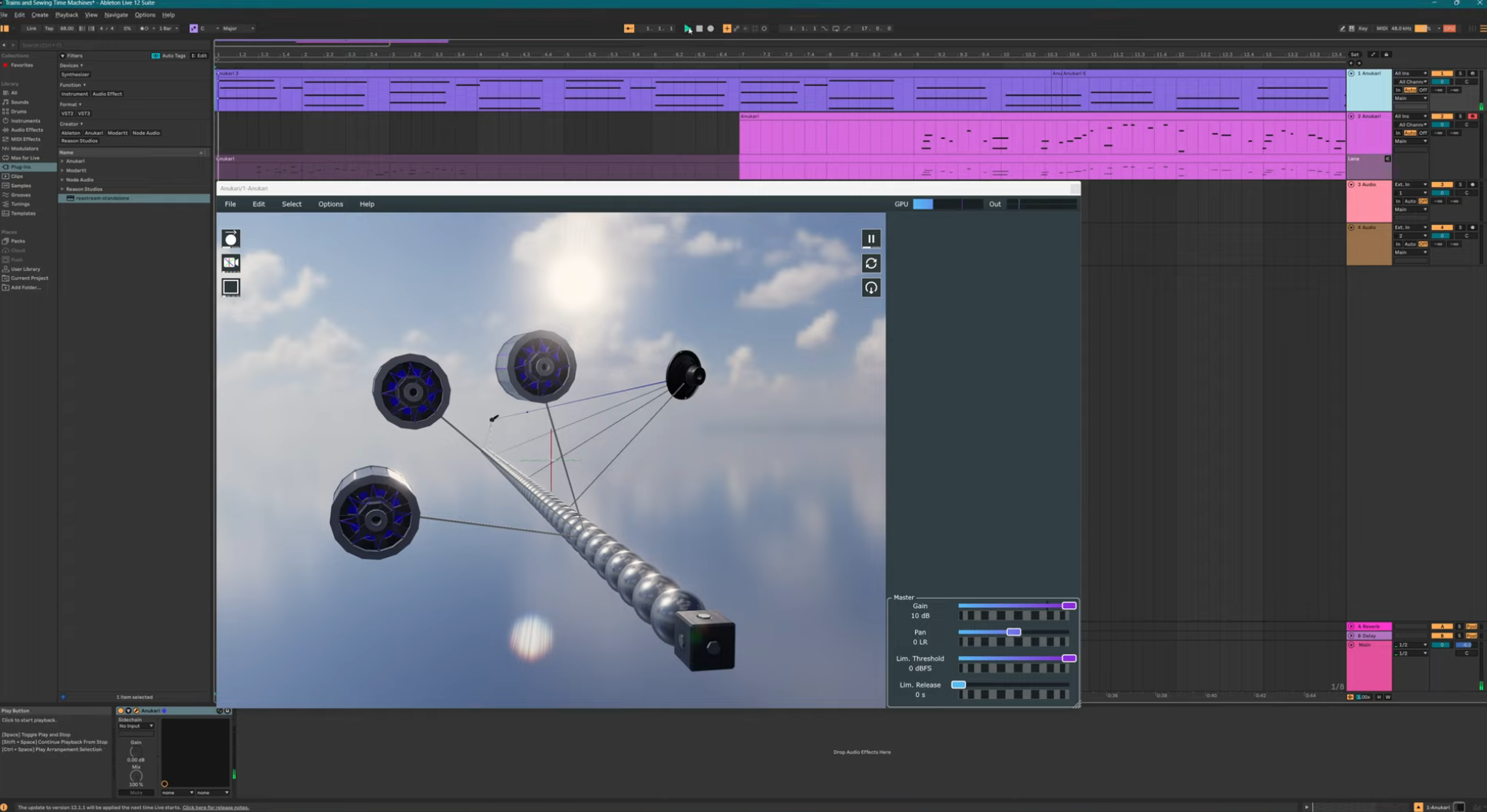
For the first year or so, Anukari was making really interesting sounds, but I had not really cracked how to do polyphony. You could create instruments that could play multiple notes, but to do so you had to build multiple sub-components, one for each note, and manually map each of them to a MIDI key, and tune it to the note you wanted. This mode is still available, and I personally think it's the coolest mode (see the Mallet-Metallic/4 Ding Chromatic preset).
But this mode is not very approachable. It's extremely labor-intensive, and it seemed unrealistic that anybody would buy the synth without a better form of polyphony.
The essential problem for polyphony in Anukari is that you create a physics system, and tune various parameters like mass, spring stiffness, and so on, and all these parameters affect both the pitch and the timbre. For polyphony, you want to somehow be able to change the pitch without changing the timbre.
I had lots of stupid ideas for how to do this, including some kind of insane gradient descent optimizer that would adjust the parameters. My big breakthrough, though, was realizing that the problem was far, far simpler than I had expected: all I needed to do is change the rate at which time passes in the simulation.
You can read the full story arc for polyphony in these three devlog posts: The Idea, It's Alive, and It is Amazing. Here's a video of the first working example.
The third devlog post above starts with the words "HOLY SHIT," which accurately summarizes how I was feeling. More than a year into the project, I think this was the first time that I was really starting to see Anukari as something that other people would actually want to use.
After finally solving polyphony, I decided it was time to get a minimal viable Anukari ready for some early testers, so I could start to get feedback from other people.
This took a while. All my early development was on Windows, so I needed to port it to macOS, and because Anukari at this time used the GPU for the audio simulation, there was a lot of platforms-specific code. I also needed things like an installer, a basic website, and crucially, I needed some kind of licensing system. There were just a ton of small projects to do, so it was not until August 2024 that I was able to first release Anukari to testers.
I believe that this is the very first demo video of Anukari that was made by someone other than me. This was made by my good friend Joe, the first person to test Anukari, even before the pre-alpha officially opened.
At this time I launched the Anukari Pre-Alpha. I'm not sure exactly why I called it a "pre-alpha" instead of just an "alpha." It's kind of silly, because I never dropped the pre-, and so later Anukari went straight from pre-alpha to beta, with no actual alpha period.
In the wake of the original Introducing Anukari video, I had a little community in my Discord server, with a few dozen folks in it, mostly people who were interested in mass-spring synthesis before hearing about Anukari. A lot of these people were also software developers, some of whom had built Anukari-like prototypes.
So it was easy to get my first 10 or so pre-alpha testers. I think they were basically all people who I had chatted with a little on Discord. Here's what I believe to be the first demo video made by a pre-alpha tester, Popbot (definitely check out his music):
I owe a huge amount of thanks and appreciation to Anukari's pre-alpha testers. It was usable but extremely rough, and was missing a ton of important features. But I had people who would test every release, and often provide extremely detailed feedback. It was a bit overwhelming at first, because testers were pointing out so many things that I could improve, and my backlog of TODOs grew substantially.
Fortunately I have a lot of experience being methodical about work planning, so I tracked all the user feedback (and my own ideas) in a spreadsheet, and continuously tried to work on what I considered the most important items.
From the very beginning, performance has always been a challenge for Anukari. The physics simulation is extremely computationally demanding, and I wanted people to be able to build huge, complex systems if they wanted. (Largely because that's what I have fun doing.)
The pre-alpha period was the first time that Anukari ran on a diverse set of hardware configurations. At this time I had essentially just 1 Windows machine and 1 macOS machine to test on, so I didn't really know what to expect.
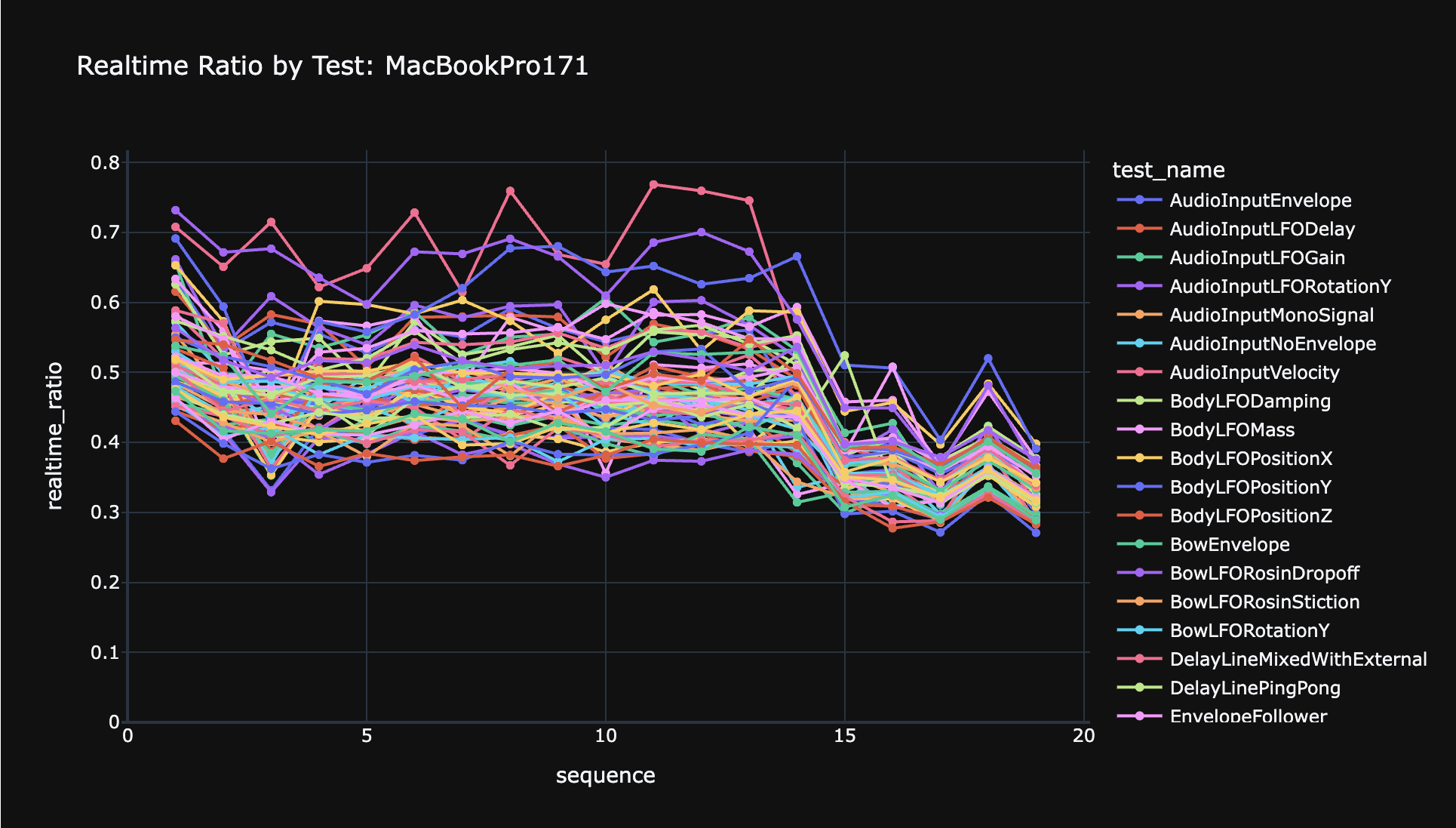
The most common feedback I was getting at this point was around performance. Most of my testers were on macOS, and that's where I was seeing the most performance trouble. The problems were really confusing, though; sometimes people with better hardware got worse results.
This problem turned out to be due to Apple's power saving features. Their heuristics for determining when to give full performance to the GPU were not working well with Anukari's workload. The entire story arc played out over the course of a full year:
My open letter wound up exploding and was in the #1 slot on Hacker News, which got Apple's attention. I posted it in the morning, and by the evening had met with two Apple GPU engineers on video calls. I ended up working with one of Apple's engineers quite extensively. We got Anukari running extremely fast, and also I provided feedback and a testbed for their new low-latency APIs for Metal 4.
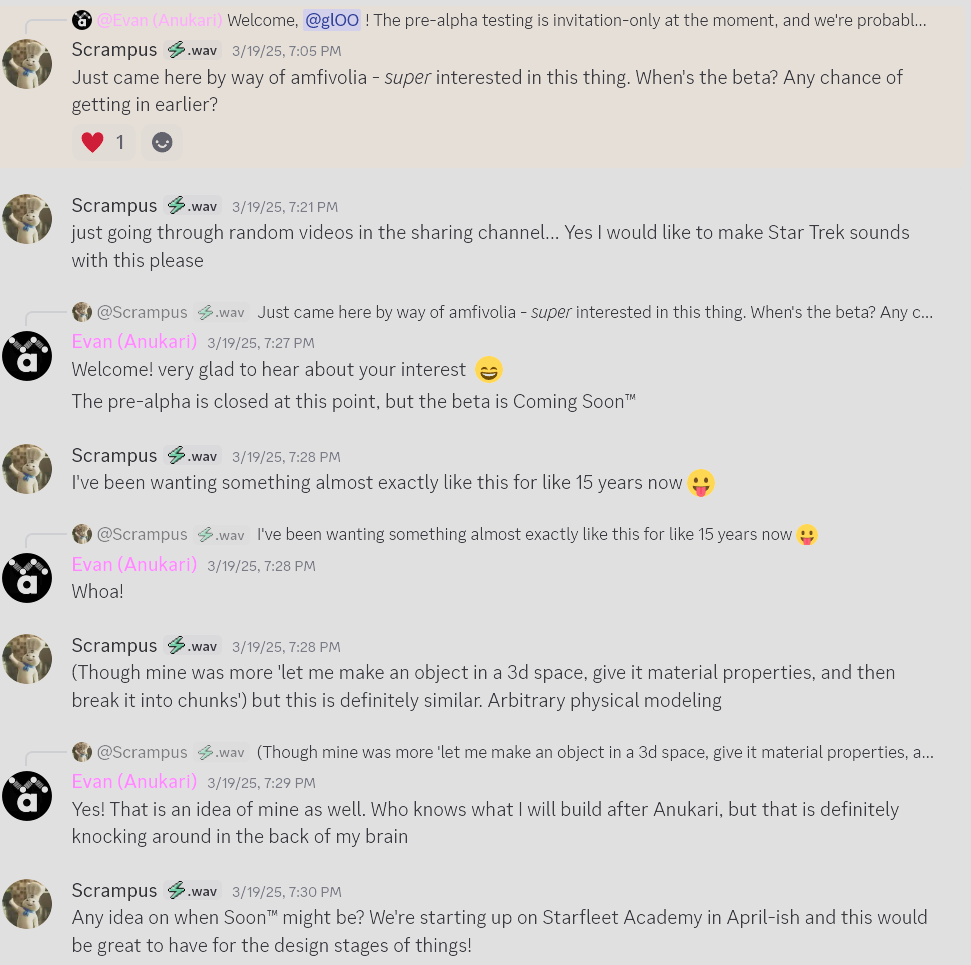
A couple weeks before the Beta launch, someone showed up in my Discord server, and said "I would like to make Star Trek sounds with this please."
Anukari is pretty great for making weird sound effects, and I thought that they were just saying that they wanted to use it to make fun sci-fi-type sounds. So I told them that I wasn't taking more pre-alpha users at this point, but the Beta was coming soon.
A couple messages later, though, after some clarification, I realized that they were talking about literally making sounds for the Star Trek television show Starfleet Academy. It turned out that the person I was chatting with was Mike Schapiro, the lead sound designer for Star Trek.
I was pretty blown-away that he was interested. Keep in mind that my posts on this devlog all begin with "Captain's Log: Stardate XXXX." I have been a Star Trek fan since the first time I got to stay up late enough to watch a TNG episode.
As a super hardcore sound designer, Mike ended up providing a huge amount of useful feedback. And plus, he's just a really nice and funny guy.
In April 2025, I felt that Anukari's performance was pretty solid, and I had addressed the most important feedback from the pre-alpha, so I was ready to launch a paid Beta version. At this point it was super stable (after investing a lot of effort in automated testing), and was working well on a variety of hardware.
This was the first time in the project where I ended up spending a lot of time on non-engineering work. I had to set up a business entity (an LLC), get proper documents like the EULA written, get the website set up to do payments, etc. There are lots of random details that only came up once I was planning to accept people's money.
I also felt that I needed some better tutorial videos, and also more presets, for the Beta. Furthermore, I wanted some really nice 3D models, rather than the chunky ones that I had made myself in Blender. So I ended up getting help from other people for the first time. My friend Jason Clark helped with the tutorials and presets, and Amfivolia did the 3D models. (Later, Jake Siders also helped with some amazing preset work too.)
The first couple of days of the Beta launch were pretty rough. For the pre-alpha, I had success with emailing a press release to various journalists, and got a lot of attention that way. But many of these same journalists ignored my emails for the Beta, so on launch day there was very little splash. Almost nothing got published about it, and my announcement video wasn't getting any traction. Really the only attention I got was through my mailing list, which did have a few hundred people on it.
The very first video that someone posted about the Beta launch was entitled, 50% OFF Anukari – 3D Physics Synth You Might NOT Need 😅. Here are some quotes from the video:
Keep in mind that at this point I have poured more than two years of my life into this thing, not to mention investing money in paying Jason and Amfivolia for their work, money for lawyers to help me get the LLC set up, etc. And every journalist ignores me, and the first video someone makes is completely negative.
I posted the Beta announcement to the KVR forums. One of the very first comments included, "The concept is highly interesting but the presets failed to show anything usable for me." And then people were complaining about performance (real issues), and the free demo noise being too loud (it was).
Some other comments I've received during the Beta:
So basically the Beta got very little attention, and the initial results were all pretty negative. I got a few sales in the first days, from folks on the mailing list, but things did not look promising at all. Things looked like they were going to simply trail off in a couple of days with no momentum.
I was... not feeling great at this point. I am not really prone to feeling despair, but I started to have a sense for what that could be like.
And then a couple days into the Beta, completely out of nowhere, Mick Gordon (well-known for his work on the DOOM: Eternal soundtrack) posted a demo clip entitled, "yo anukari is sick":
This clip single-handedly turned the Anukari Beta around. Mick took some of the weirdest things about Anukari and used them in a beautifully musical way. This clip was by far the most awesome demo of what could be done with Anukari. Feedback was outrageously positive, and this one post took me on Instagram from tens of followers to thousands. Immediately sales began rolling in.
Everything changed after this video. Journalists who had been ignoring me were suddenly interested again, and articles got published. And most importantly, Mick reminded me that there were people out there who wanted this thing to exist, and who were having fun with it despite whatever issues existed in the Beta.
I sent Mick a note to say thanks, and he was kind enough to chat with me a bit. He's a super nice guy, and he gave me some words of encouragement that I will never forget: "Remember dude - you’re never going to get hate from someone better than you."
The Beta was now generating some income, as well as a ton of user feedback. There were two top issues that made me nervous: performance, and issues with the 3D graphics.
They made me nervous because in both cases, I had already put in a huge amount of effort, and it was no longer obvious to me how to make substantial improvements. I had originally hoped that 1.0 would launch a few months after the Beta, in time for the 2025 holiday season, but that was looking pretty unlikely.
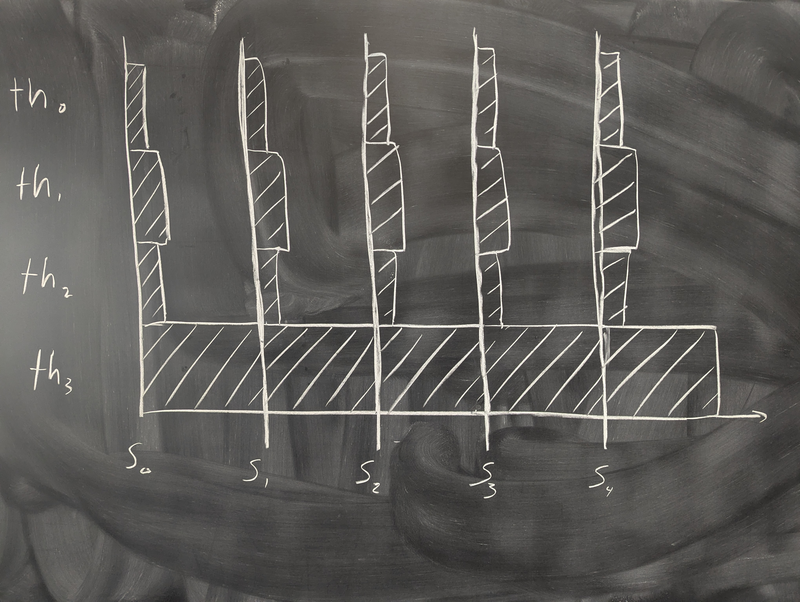
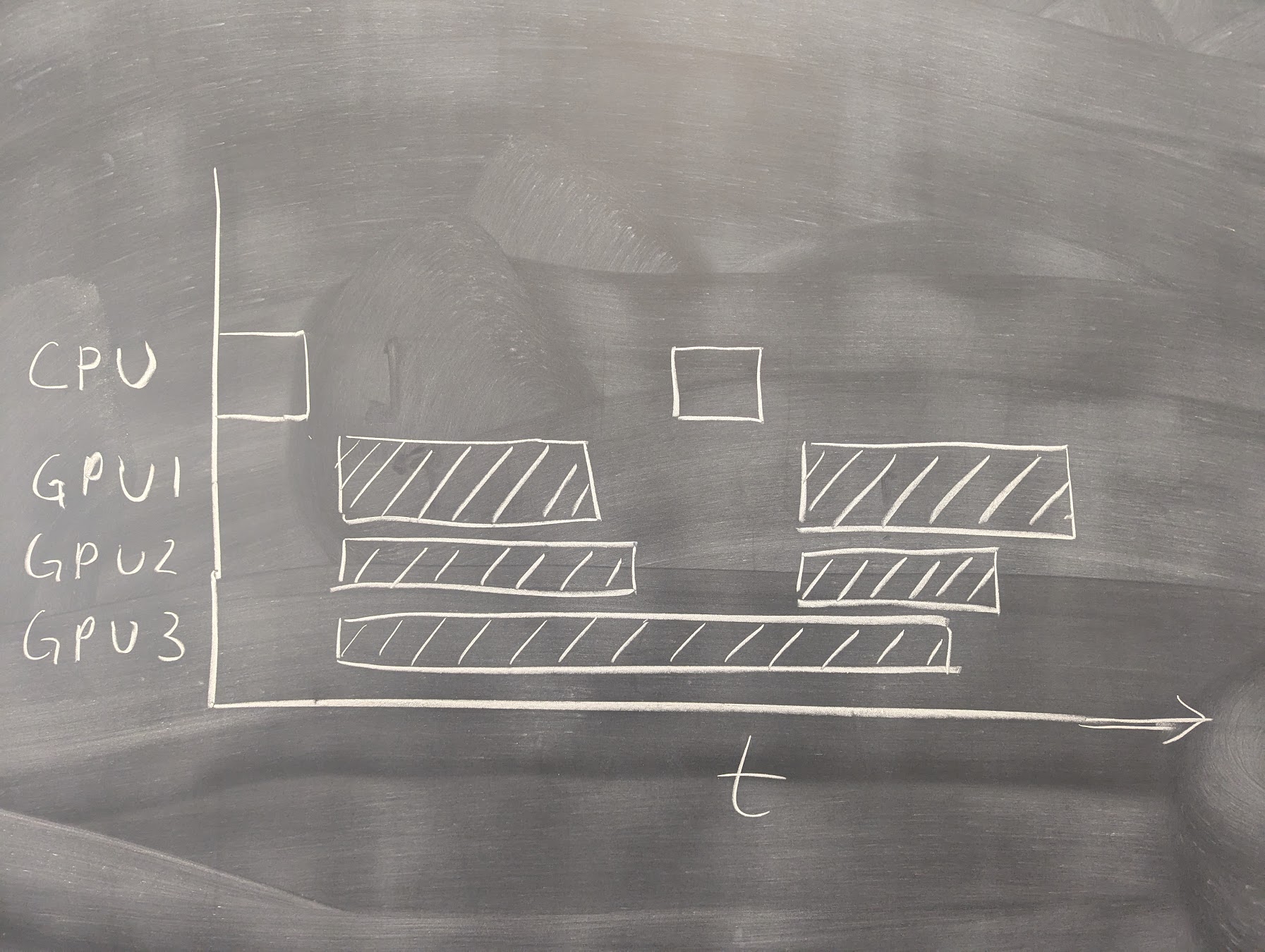
Fortunately in October of 2025, I had a huge breakthrough with the performance. It's super embarrassing, but all the gargantuan effort I had put in to getting Anukari to run on the GPU was ultimately a bad idea, and I found a way to make it run far better by using the CPU. I've written about this extensively, so I won't repeat it here:
So after a couple months of, frankly, working an unhealthy amount on the CPU performance, Anukari was finally at a place where performance is no longer a major issue. Obviously there's still room for improvement, and I have continued optimizing it, with some pretty big gains since then. But it is not a big issue at this point.
Now the 3D graphics were the only thing that still made me nervous. There were two issues: weird compatibility problems on integrated laptop chips, and stability (crashes). I had made significant improvements in both cases, contributing feedback and fixes to the Google Filament 3D renderer I was using. But I had come to the point where there were limitations with Filament which prevented further stability improvements.
I was starting to think that I'd just have to live with the issues. Anukari was pretty damn stable, and most of the problems only presented on slightly less common graphics hardware. But a few months before I was hoping to launch 1.0, I had my "Claude Code Moment" and realized that I might be able to completely rewrite the 3D graphics (for the 3rd time) without Filament, resulting in a much more stable and compatible system.
Surprisingly, this worked brilliantly. I wrote a long devlog post about it here. The new renderer is more stable, more efficient, has more (Anukari-relevant) features, and is much simpler.
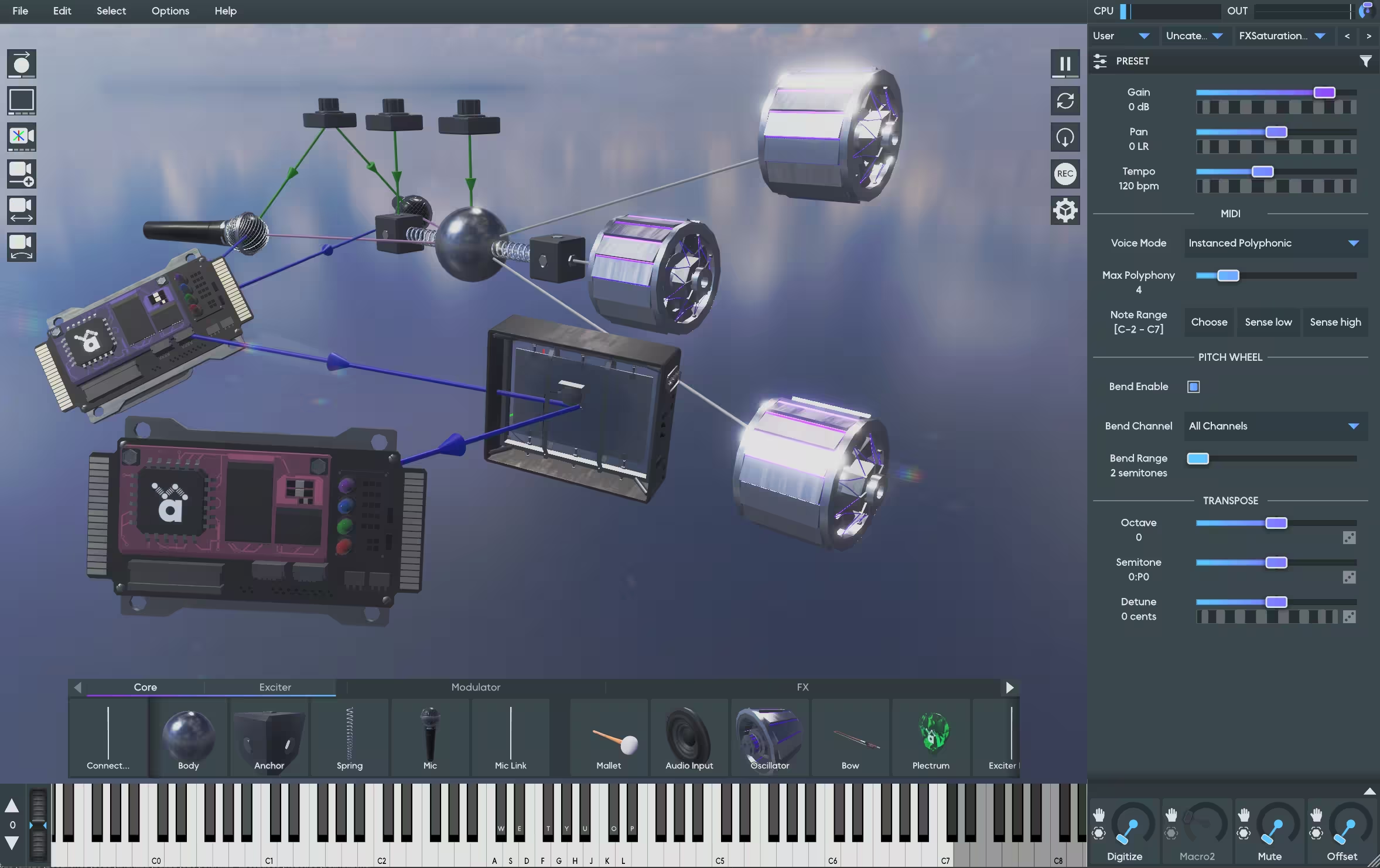
In addition to these crucial fixes, during the Beta period I also added a ton of features. VFX shaders, screen recording, microtuning support, multichannel audio I/O, drag and drop macros, big improvements to both audio quality an UX, and an entire library of audio FX objects.
I am good at engineering. I am okay at music. I am bad at marketing.
At my first software job, the CEO would occasionally ask me to work from home when he'd be hosting clients at the office. He was worried that I'd start talking about all the shortcomings in our software and make it look bad. He wasn't wrong: I have the tendency to focus on the flaws. This is good for engineering: I focus on the flaws and fix them. But it's not the right skill for marketing.
Early in 2026 I took Anukari to NAMM. I rented the smallest booth available, and set up two full demo rigs for people to play with, and had a big TV displaying one of them for onlookers.
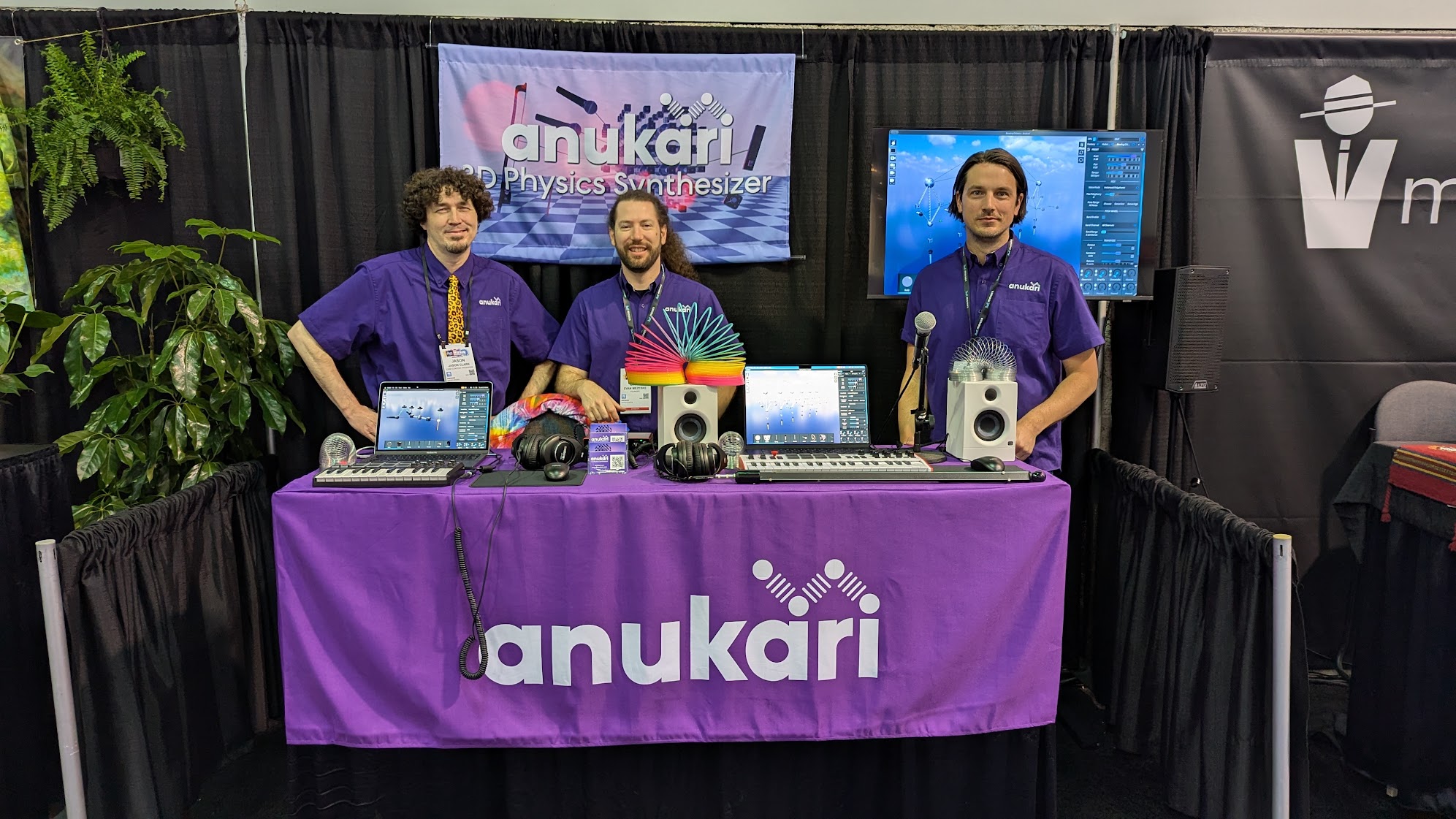
NAMM was about as fun as it was exhausting. I wrote about one fun story from NAMM, regarding The Julius O. Smith III votive candle. I meant to write more but got distracted with working on Anukari.
One day at NAMM, Chris Hayzel came by the booth and chatted for a few minutes about marketing. Lots of people came by to sell me on their services, but Chris and I hit it off. We just seemed philosophically aligned, and he seemed really excited about Anukari in particular. Anukari wasn't just one business in a long list of potential clients for Chris: he actually resonated with it. (Apologies for the pun, I couldn't help it.)
A few weeks after NAMM, Chris and I talked more, and I hired him to help with marketing Anukari. Chris was responsible for the new, greatly improved website, and also he is an immensely talented video producer, including the direction and editing. He produced the latest Anukari intro video which really took off recently:
Chris really is a multi-talented person, and there's no way I would have been this happy about the 1.0 launch without him.
I'm feeling good about 1.0. The Beta period was (much) longer than I had hoped, but I have always planned to release Anukari when it's ready, instead of rushing out something half-baked just to meet an arbitrary deadline. I've been lucky to have enough savings that I could be patient.
At this point I'm super happy with Anukari's stability and performance, and also with the features it has for 1.0. I debated whether the FX object was crazy to include for 1.0, in terms of adding more complexity at the last minute. But it is really, really cool, and nobody has reported problems with it, so I am glad to have included it.
While I feel good about the synth itself, I am definitely a bit nervous about how things will go. I'm not expecting to make gazillions of dollars (if I wanted that, I should have simply stayed at Google). But I would really like to make enough money that it makes sense for me to keep working on Anukari. And in particular, I'd like to make enough to be able to continue working with really fun people. The audio plugin market is pretty brutal though. There's absolutely no guarantee that this will happen.
To a large extent, the "pre-alpha" and "beta" labels have been my comfort blanket until now. If someone complained about performance, I could always reply with, "it's a Beta, I'm working on it!" Or if some obvious feature was missing. But now, at 1.0, users can reasonably expect that it should perform well. Now, if a negative review is written, there won't be a disclaimer about it being a Beta. That's pretty scary!
As Larry Page would say, I am "uncomfortably excited." Which is a good place to be.
Right now I want to continue adding features to Anukari 1.0, so it will continue to improve even for people who have already bought it. Given the non-subscription model, I may eventually need to think about a paid 2.0 upgrade, but for now I'd much prefer to just keep making 1.0 more awesome for as long as possible. Hopefully many years!
I have a huge list of hundreds of features I want to add (some big, some small). One thing I have promised is that Linux support would come as one of the first big updates after 1.0, so I need to make good on that promise.
The next big thing after that is likely to be a wave of new physics features. I'm thinking about new kinds of spring modes, more parameters for Body objects, new types of exciters, stuff like that.
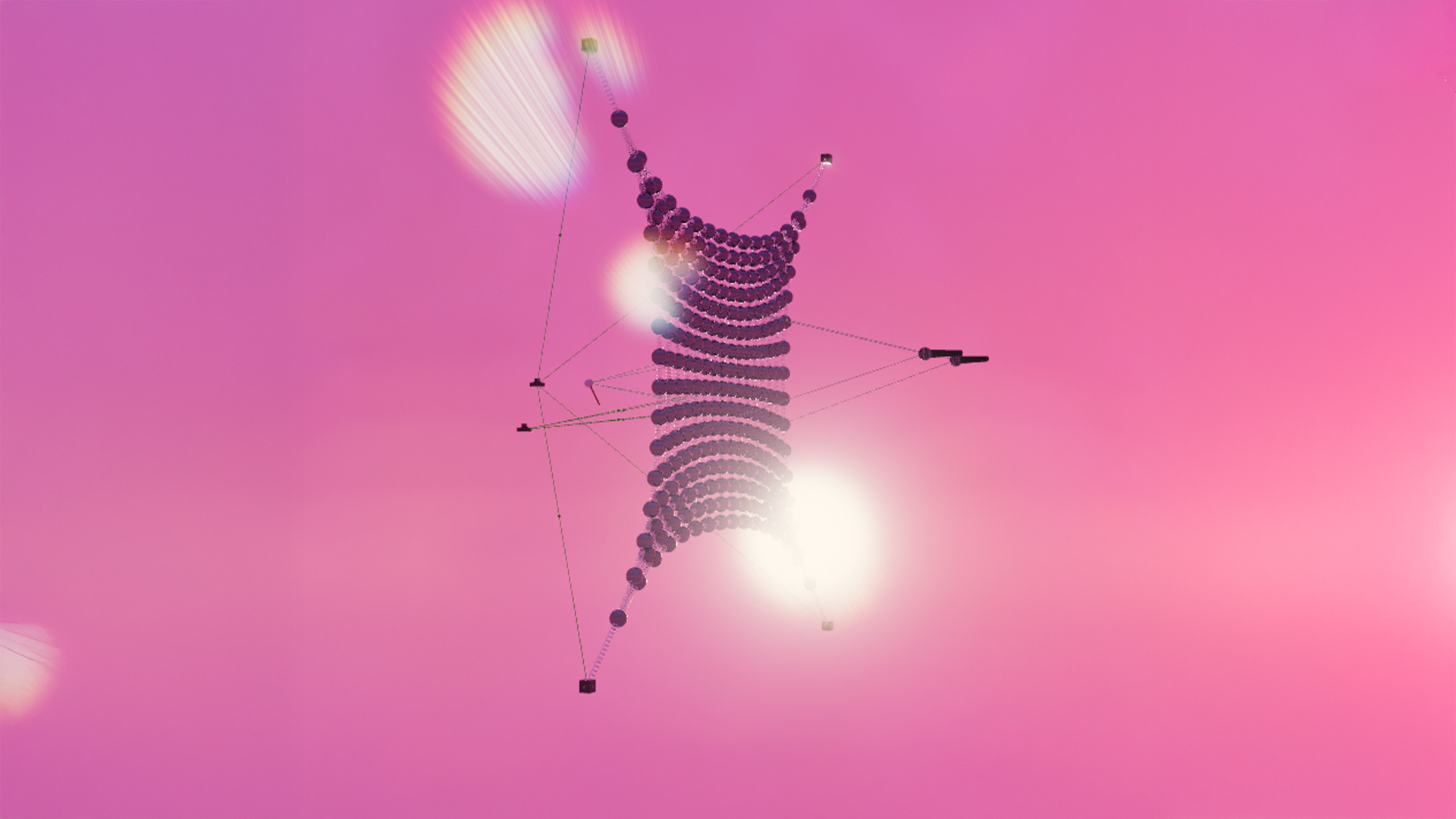
Another more vague idea that I am really excited to dig into is something I'm tentatively calling the "Modulosphere". It needs a lot of prototyping before I know exactly what it will be like, but the basic idea is a large spherical object that can be used to modulate the parameters for all the objects contained within in. The radius and position of the Modulosphere could themselves be modulated, and it could be dragged with the mouse. It will have a feather parameter. For an example, picture a large sphere moving back and forth on the Large Membrane preset, fluidly increasing the mass of the body objects it crosses over in a wave-like fashion. I could go on here, but the details are up in the air. Suffice to say, I think there's something extremely cool to be done.
But who knows. I tend to work on the ideas that are most exciting to me, and those might change. The one thing that won't change is that I am excited to continue making Anukari into my dream synth. I've got a lot of work to do.




.jpg)