Captain's Log: Stardate 79886.9
One of the things that has been great about the productivity boost I'm getting from having AI help me write code is that I get to be way more ambitious. Case in point, I have found that I can get to a lot of features that previously would just stay in my backlog spreadsheet as P2s.
Background: fun code vs not
In general, I love writing code. I've written code since I was a kid, and even during periods where I managed people, I always carved out a certain amount of time to continue writing code, because it was my therapy.
But it should be said that not all code is fun to write. The part I enjoy is the challenging puzzle-like aspect, especially where there are interesting constraints like trying to make the code run faster, use less resources, etc. There's also the... other parts. Which sadly often end up taking more time than the fun parts.
The great Rick Hickey (a huge inspiration to me) spoke about what he called inherent complexity versus incidental complexity. In computer programming, inherent complexity is that part of a problem that is not reducible; it's the core thing that you are trying to solve for. In an audio plugin this might be the DSP algorithm, or in Anukari's case, the physics algorithms. On the other hand, the incidental complexity is all the arbitrary stuff that needs to be done outside of the core problem. For example, a naked DSP algorithm is useless without wrapping it up in a nice VST or AudioUnit plugin, adding a licensing system, an About menu, and so on. These things are important, and often required, but they're not the core problem.
I've always found that the inherent complexity is the fun part, and the incidental complexity is less fun. For an example, consider the plugin example: for broad compatibility you may want to support at least VST3, AudioUnit, and AAX. There's no actual inherent reason why there need to be three formats. The work to support all three is purely incidental and arbitrary. While there is something "pure" and beautiful about a physics equation, the plugin format mess is something humans have brought entirely upon ourselves.
Historically, more engineering time has been spent on solving the stupid incidental complexity than has been spent on solving beautiful inherent complexity. In fact many corporate software jobs solely involve the incidental complexity. These jobs are soul-sucking.
Fun/unfun parts of UX work
UX engineering, like anything else, has both inherent and incidental complexity. The inherent part is really interesting to me. It's basically imagining, "what would be the simplest and easiest-to-understand way that this feature could work?" Often this is a really difficult and ambiguous question, and it requires a lot of experimentation to answer it.
But once you find a good UX solution, by definition it's a really simple idea. So implementing it should be simple... right? Of course not. There are two things going on here: (1) the UX may be simple because the software is carrying out complex operations to make it simple, and (2) UX software has mountains of incidental complexity.
The first thing is fun. It's really the "unseen" inherent complexity to the simple UX solution. The second thing is not fun. It's basically struggling with whatever UI framework you're using to try to get it to do what you want.
But here's the amazing thing about AI for coding: it's really, really good at handling the incidental complexity. Claude basically knows everything about every API I might use. And it can write good code tens or hundreds of times faster than me.
So the reason I'm much more ambitious is that I know that I'll get to work on the fun design problems, and a robot will handle the annoying slog to figure out what awful workaround to use for some hell-spawn garbage UI framework.
Anukari UX improvements
I have a spreadsheet where I track the features, improvements, bugs, etc, that I would like to work on. I periodically scan them and reprioritize, and typically only work on the top-priority items. Since the very early days of working on Anukari, this spreadsheet has always had 150-200 unfinished items in it. That means that I tend to add tasks to my TODO list as fast as I can finish them. (For reference, there are 1,300 total rows in my TODO sheet, if I include finished tasks.)
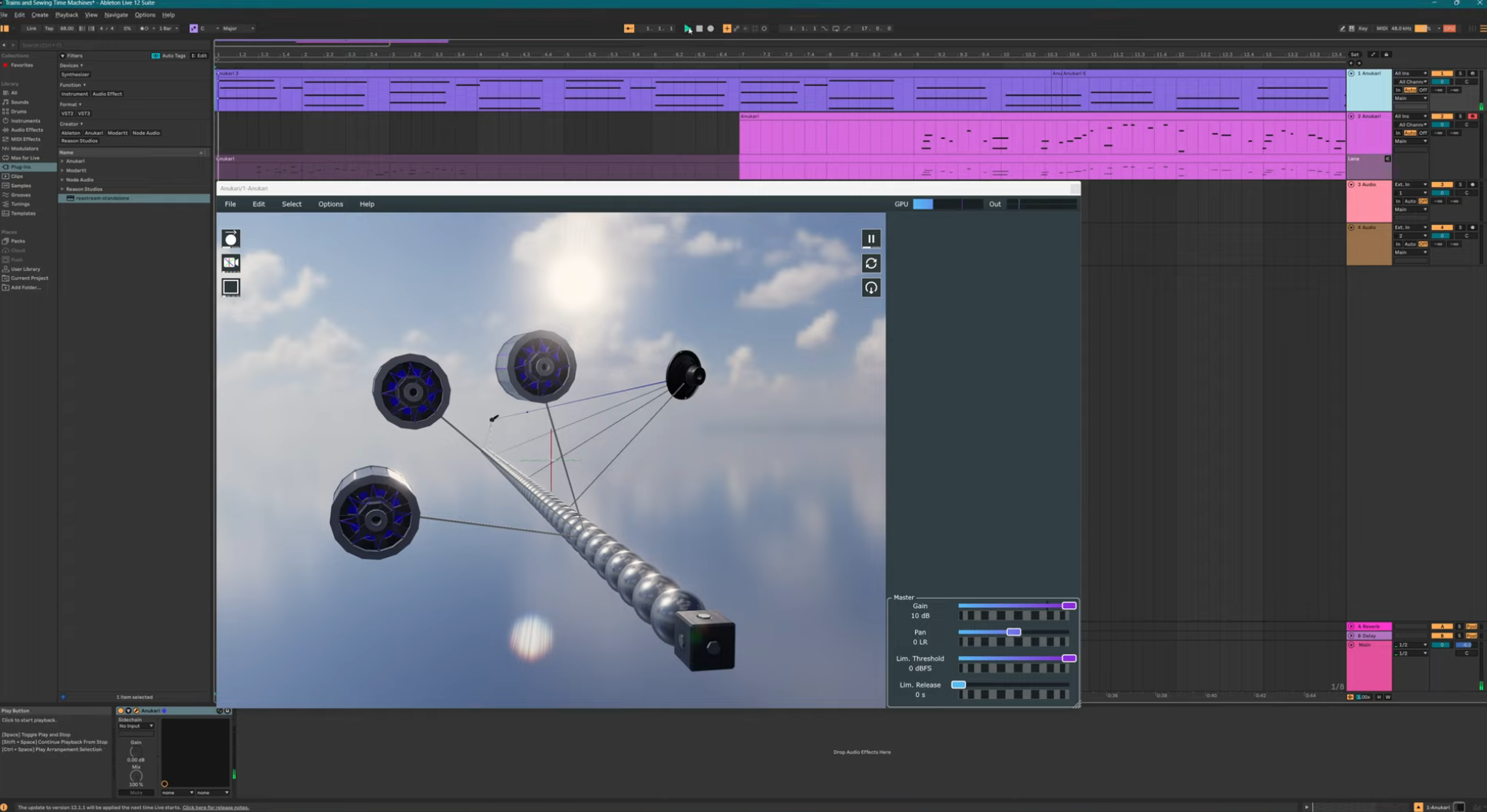
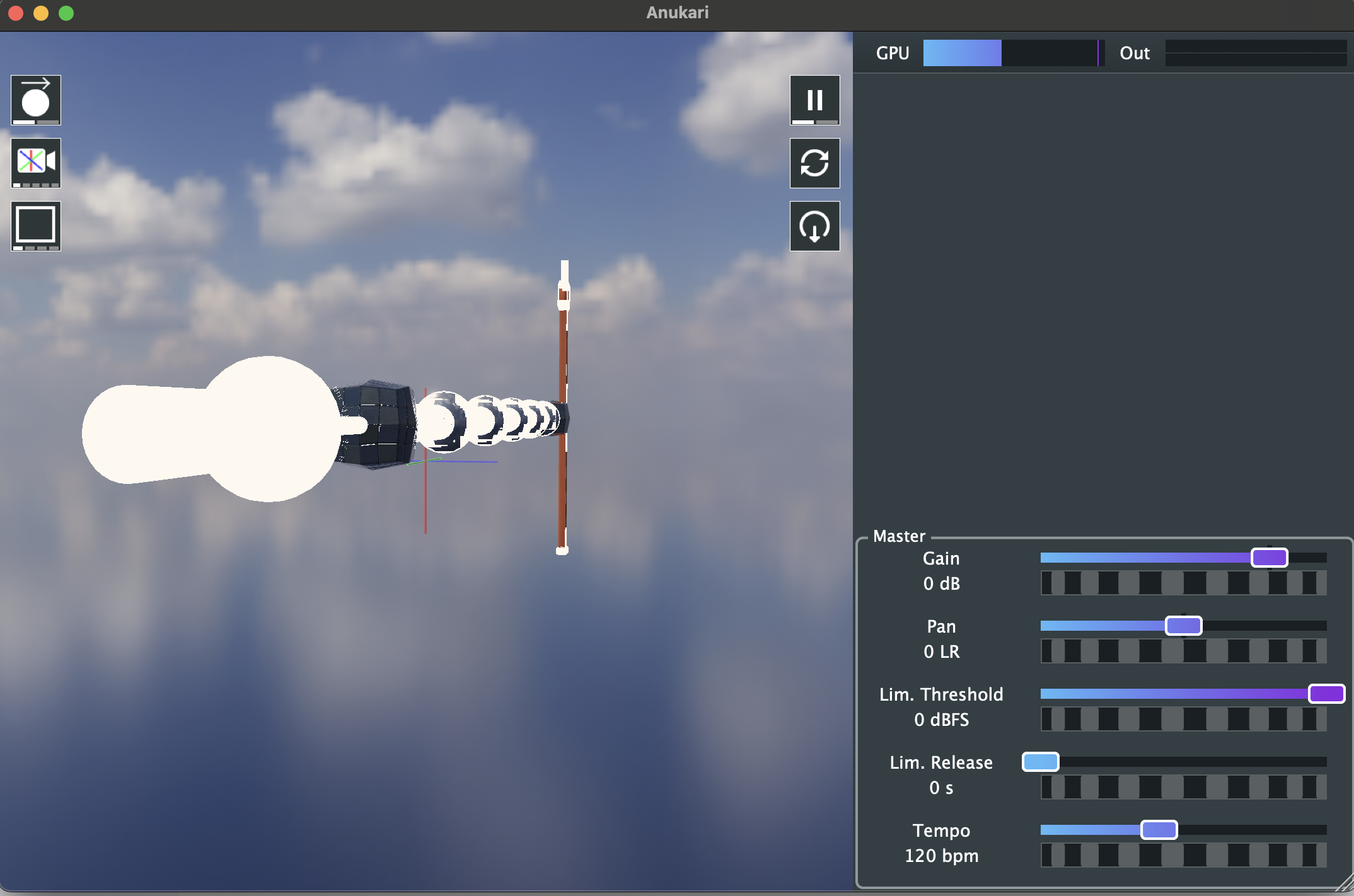
There were a few items on my TODO list that I knew were important, but I also knew how much of a pain in the butt they were going to be, and so they hung around without any progress. But with Claude doing a lot of the annoying work, I was able to tackle a whole bunch of these issues:
- All parameter changes are now smoothed properly, so e.g. rotating a mic no longer buzzes
- A ton of parameters that couldn't be modulated now can be
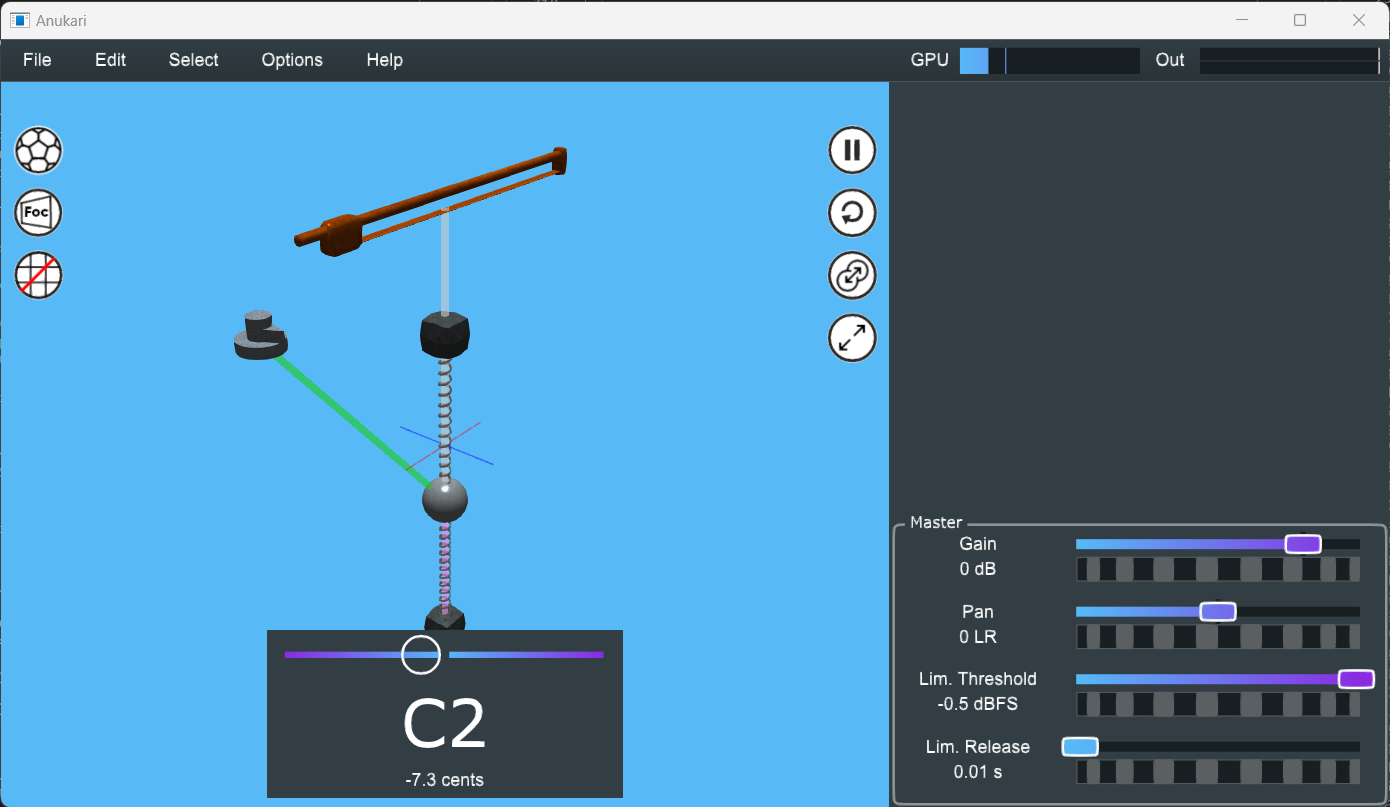
- The tuner works better and can play a reference tone
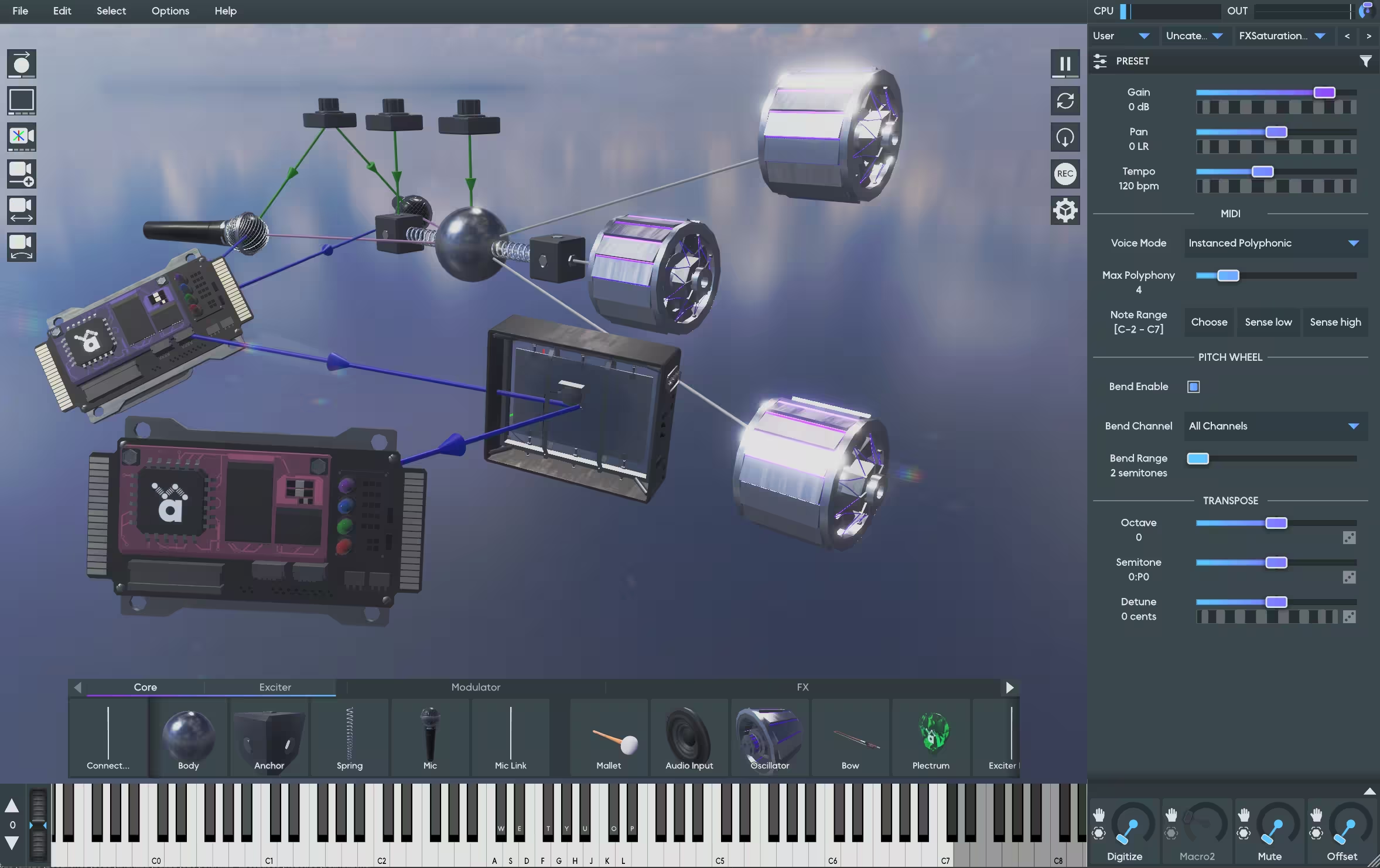
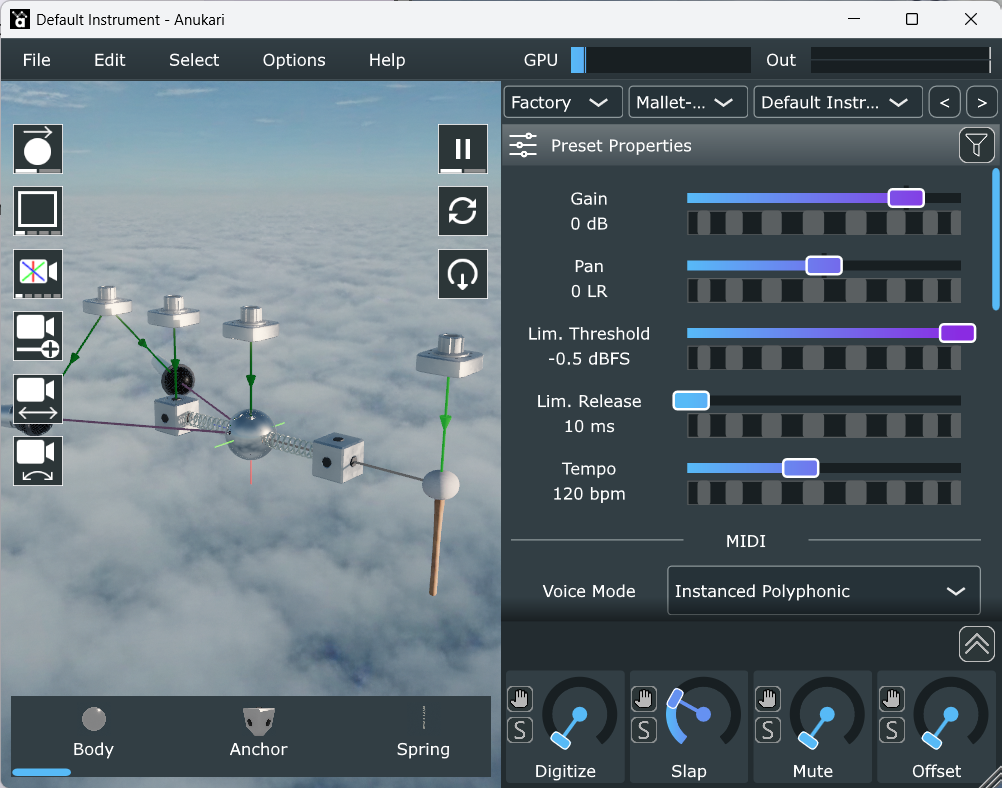
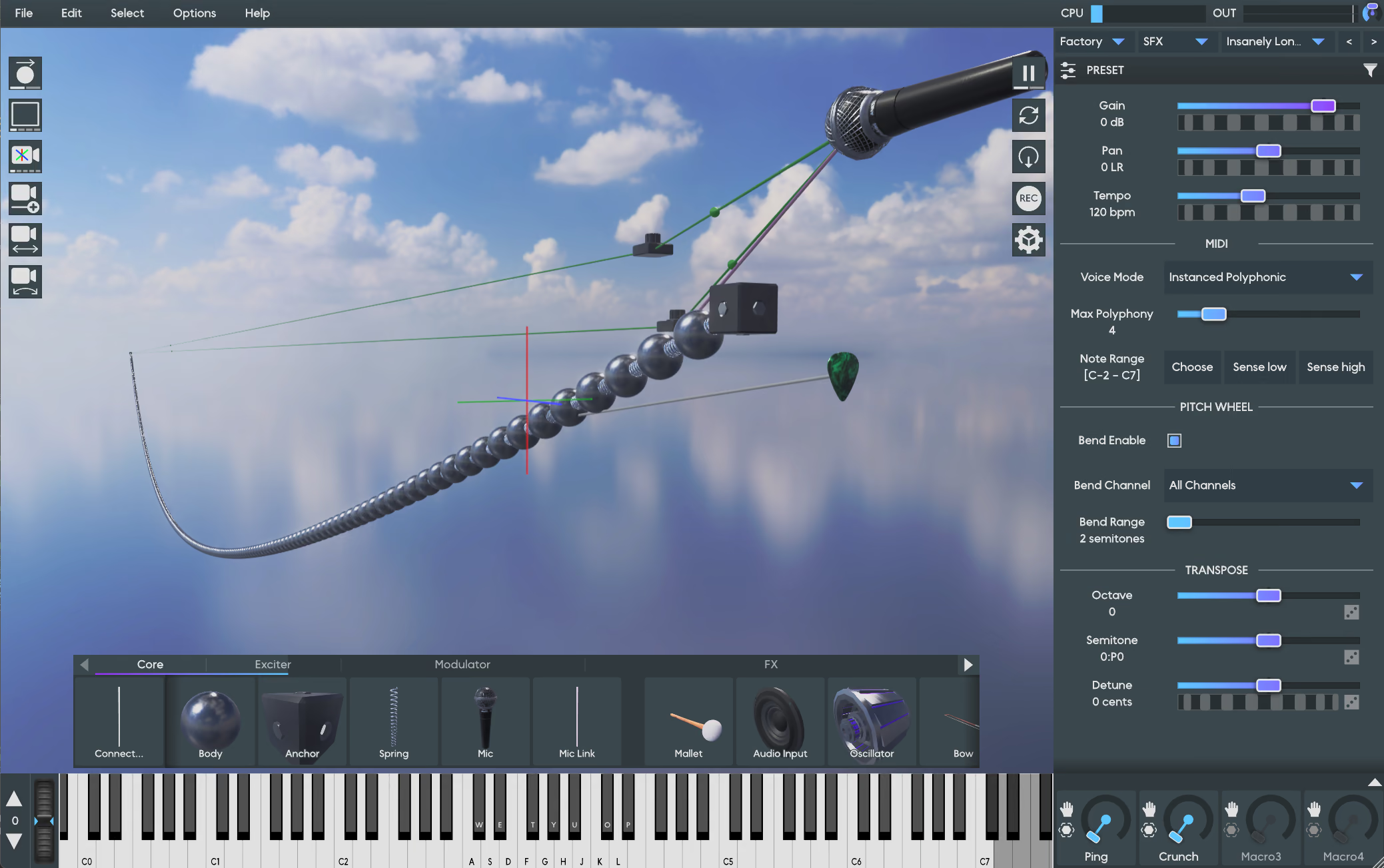
- The object palette now has categories, better scrolling, and a "connect" button
- ... and like 20 other small UX things.
None of these is revolutionary in itself, but I think they all add up, making Anukari just feel better to use. Especially for power-users these things matter a lot.
Where my head is at
I mentioned that I love writing code. So it's reasonable to ask: now that AI is doing some of that, how do I feel about it?
A few months ago when it started to dawn on me how much things were changing, my first reaction was definitely a feeling of sadness, or loss. Writing code has been a huge part of my life, and I spent a long time getting good at it. So it's really weird to see a robot doing it faster and sometimes better than me. If a robot can do my job, what is my purpose?
I decided not to be mopey about it, and instead to simply accept the reality of the situation, and figure out how to work within the new circumstances.
And I'm glad I did! It turns out that by handling a lot of the grunt work, AI is actually freeing me up to spend more time on the creative and interesting aspects of Anukari. Instead of fighting with plugin formats, instead I get to think about what it should be like to use Anukari, what kinds of features it should have, and how it should sound. And I don't have to compromise nearly as much: I feel excited to take on features even when they involve an annoying coding aspect.
I think that's the biggest change I'm feeling from AI: I am invigorated and excited to tackle problems that would have just felt like a slog before. It's even reframing how I interact with users. Previously when users would point out flaws or areas for improvement, I'd sometimes feel frustrated because I knew they were right, but it was just adding to my huge backlog.
But now I often just immediately try to solve their problem, and often it goes super quickly! This is way more fun for everyone. :)
Some last thoughts on AI
As useful as I find AI for the mechanical grunt work that's sometimes involved in engineering, I have some boundaries.
For example, this devlog will NEVER, EVER, EVER contain text that an AI wrote, or even edited. The thought of that makes me want to vomit. For one, I mostly write this devlog because, well, I enjoy writing it. But also I have respect for my readers. I hate reading AI spam, so why would I inflict that on other people? My favorite part about working on Anukari is the human connections that it continues to create. My collaborators, users, readers, critics, etc, all provide meaningful interaction. I have no interest in polluting that with slop.
Another boundary is that I am in complete control of the creative process, and that while AI can help me execute my vision, it is not involved in coming up with the vision. Nobody wants to read a blog post written by AI, and I believe nobody wants to use a synth designed by AI. Again, to me this is a matter of respect for my users. I want people to enjoy sharing in the weird vision I have for Anukari. If it's not my vision, but a robot's vision instead, what kind of enjoyment is there in sharing?
I guess fundamentally my feeling is that when AI is used to give people superhuman powers to realize their artistic vision in all its glory, it's awesome. But when AI is used to provide the artistic vision itself, I want absolutely nothing to do with it.





.jpg)